
.svg)


J-Pouch Surgery for Ulcerative Colitis and Crohn's Patients
J-pouch surgery gives some patients with ulcerative colitis the chance to avoid a permanent ostomy. This article explains how the treatment works, what to expect during the procedure, and where to find the best J-pouch surgeon in Los Angeles.
Living with inflammatory bowel disease is exhausting. The urgency, the pain, the uncertainty of whether today will be a good day or a bad one. It wears on you physically and emotionally. When medications stop working, or the disease becomes severe enough to threaten your quality of life, your doctor may bring up surgery. For many people with ulcerative colitis, J-pouch surgery, also called ileal pouch-anal anastomosis or IPAA surgery, is the best option on the table. In fact, the Crohn’s and Colitis Foundation found that this is the most common IDB surgical treatment for people with ulcerative colitis who need their colon removed.
Understanding what this procedure involves, who it helps, and what recovery looks like can help you determine whether this is the right course of treatment for you. Read on to learn everything you need to know about J-pouch surgery, including where to find the best robotic J-pouch surgeon in Los Angeles.
Understanding J-Pouch Surgery
J-pouch surgery, or IPAA surgery, is a procedure that removes the colon and rectum and uses the end of the small intestine to build a new internal reservoir shaped like the letter J. This pouch connects directly to the anal canal, which means most patients can eventually go to the bathroom normally without a permanent ostomy bag.
The full name, ileal pouch-anal anastomosis, tells you exactly what happens. The ileum, which is the last section of the small intestine, gets folded and stitched into a pouch, then attached to the anus.
The procedure is usually done in two or three stages:
- The first stage is a proctocolectomy, meaning the removal of the entire colon and rectum, followed by pouch construction
- Secondly, a temporary ileostomy is created to let the new pouch heal
- Lastly, the ileostomy is reversed, and bowel function resumes through the pouch
Who Is a Good Candidate for J-Pouch Surgery
Not everyone with IBD is a J-pouch candidate. The procedure works best for people with surgical ulcerative colitis, particularly those whose disease has not responded to medication, who have developed precancerous changes in the colon, or who are experiencing life-limiting symptoms despite treatment.
Can J-Pouch Surgery Help Someone with Crohn’s Disease?
Crohn's disease and J-pouch surgery have a more complicated relationship. Because Crohn's can affect the entire digestive tract, including the small intestine and anal area, surgeons are generally cautious about recommending IPAA for Crohn's patients. The Crohn's and Colitis Foundation notes that patients with Crohn's disease involving only the colon may be considered in certain cases, but the risk of complications is higher.
Good candidates for colectomy for ulcerative colitis and subsequent J-pouch construction typically include people who:
- Have medically refractory ulcerative colitis not controlled by biologics or other medications
- Have been diagnosed with dysplasia or colorectal cancer related to long-standing colitis
- Are experiencing toxic megacolon or other surgical emergencies
- Have strong anal sphincter function, which is necessary for continence after the procedure
- Are in otherwise good general health
The best colorectal surgeon in Los Angeles can evaluate your disease history, imaging, endoscopy results, and overall health before recommending the J-pouch procedure.
What to Expect During J-Pouch Recovery
Most patients undergo a two-stage surgical process over six to 12 months, though some higher-risk patients require a three-stage approach. During the time between surgeries, you will have a temporary ileostomy, which means waste exits through an opening in the abdomen into an external bag.
After the ileostomy is reversed, the new pouch needs time to adapt. Bowel frequency is high at first, causing many patients to visit the bathroom six to eight times per day in the weeks after reversal. Over time, the pouch stretches and adapts, and most people settle into four to six bowel movements per day.
Life after J-pouch surgery improves significantly for most patients. Research finds that the majority of patients reported good-to-excellent quality-of-life outcomes at five years post-surgery. Many return to work, travel, exercise, and engage in activities that were impossible during active disease.
Understanding Potential Risks and Complications of J-Pouch Surgery
Like any major surgery, the J-pouch procedure carries risks. Pouchitis is the most common complication, affecting up to 50% of patients at some point after surgery. Pouchitis is inflammation of the internal pouch that causes symptoms similar to the original colitis, including increased bowel frequency, urgency, and cramping. Thankfully, most cases respond well to a course of antibiotics.
Other possible complications include:
- Pouch failure requiring a permanent ileostomy
- Anastomotic leaks during the healing phase
- Small bowel obstruction
- Sexual dysfunction related to nerve proximity during pelvic dissection
How Robotic Surgery Has Changed the J-Pouch Procedure
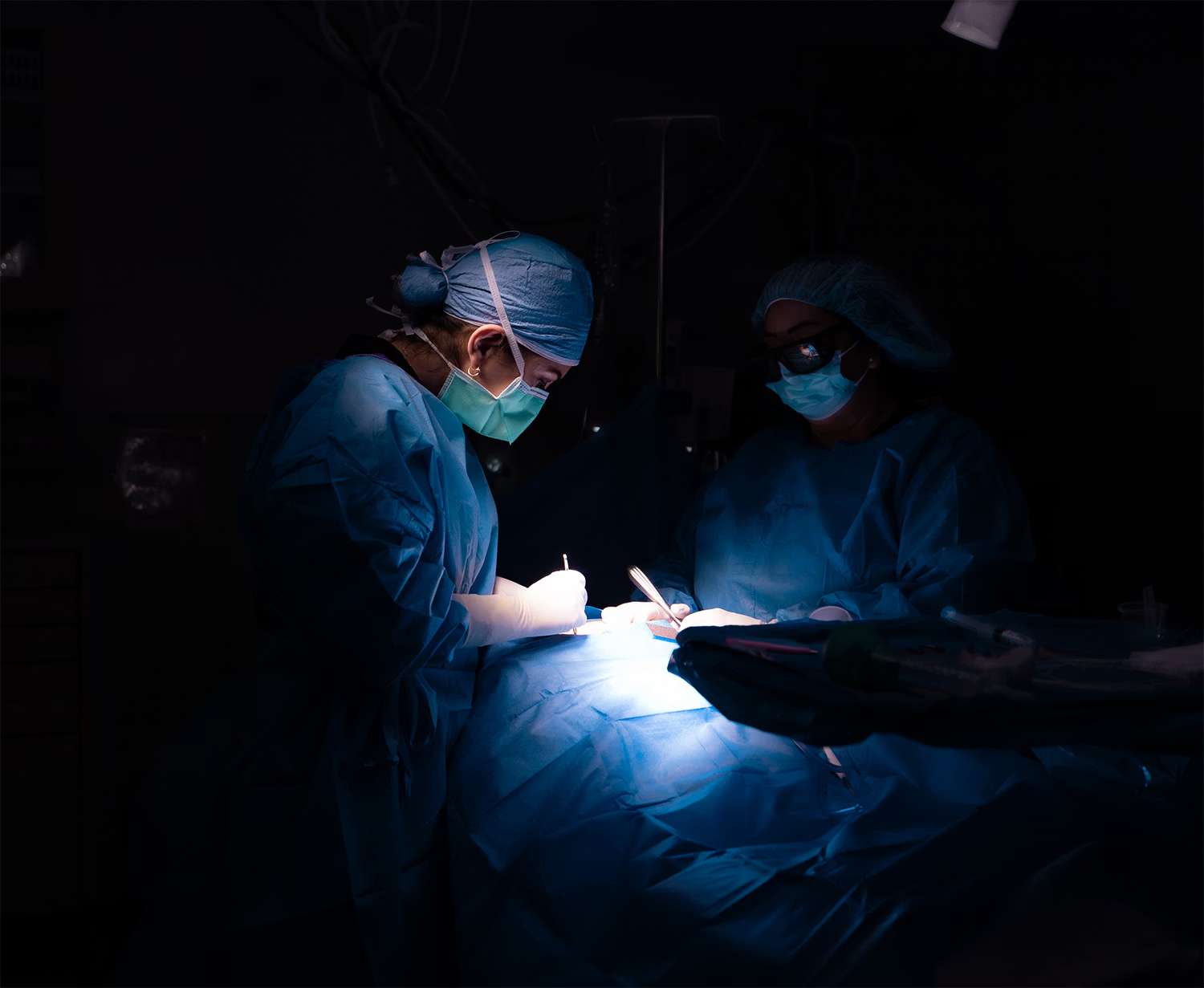
Minimally invasive colorectal surgery has transformed what surgery looks like for IBD patients. Robotic J-pouch surgery uses a surgeon-controlled robotic system to perform the same steps as open surgery through much smaller incisions.
The robotic platform also gives surgeons greater precision when working in the narrow pelvic space, which is especially important for protecting nerves that control bladder and sexual function. This approach has become increasingly standard at high-volume IBD surgical centers, and the advantages of this technique over traditional techniques include:
- Less blood loss
- Shorter hospital stays
- Reduced postoperative pain
- A faster return to normal activity compared to open surgery
Finding the Best Minimally Invasive Colorectal Surgeon in Los Angeles for J-Pouch Surgery
Ulcerative colitis treatment options extend beyond medication and IBD surgery, when performed by an experienced colorectal surgeon, can be truly transformative.
As the best colorectal surgeon in Los Angeles, Dr. Karen Zaghiyan is an early adopter and innovator of advanced transanal approaches, including robotic J-pouch surgery. This is one of many ways she has dedicated her career to offering minimally invasive techniques that help patients heal faster, experience less pain, and preserve normal bowel function whenever possible.
Ready to improve your ulcerative colitis symptoms and quality of life with robotic J-pouch surgery from the best colorectal surgeon in Los Angeles?
.svg)
.svg)
Request an appointment
For patients who need an urgent consultation, it is best to call us at (310) 289-9224. Otherwise, please complete and submit the form below and a member of our staff will contact you shortly.
.svg)

.svg)
.svg)