
.svg)

Complete Guide to Colorectal Care in Los Angeles
Strange bowel symptoms can feel scary, especially when you don’t know what they mean or who to trust. This article helps you understand when it’s time to get checked and how to choose the best colorectal surgeon in Los Angeles for clear answers and modern treatment.
Symptoms of a colorectal condition are scary and can show up in many different ways. Blood in the toilet, a burning tear that makes you dread the next bowel movement, a tender lump, unusual drainage, or a new heaviness causing pelvic or rectal pain.
It’s easy to ignore and hope it will pass, and it’s also easy to spiral into anxiety when it doesn’t. The truth is, those symptoms can come from common problems like hemorrhoids or anal fissures, but they can also signal something more serious.
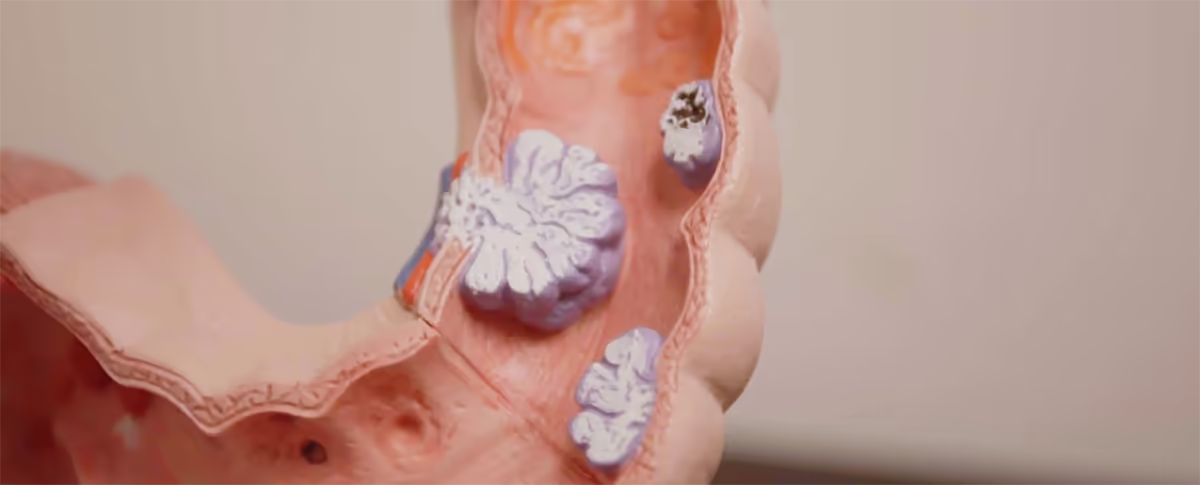
In the United States, colorectal cancer is the second leading cause of cancer death when men and women are combined. And it’s not just an older person’s disease anymore. Multiple national reports show colorectal cancer is rising in younger adults.
Read on to learn which colorectal warning signs and symptoms warrant a proper evaluation and where to find the best colorectal surgeon in Los Angeles for an accurate diagnosis and precise care.
When to See a Colorectal Surgeon: Signs and Symptoms to Watch For
It’s easy to second-guess yourself when you’re dealing with bowel or rectal symptoms, but knowing when to see a colorectal surgeon matters. Certain rectal warning signs deserve a closer look because they can point to conditions like hemorrhoids, anal fissures, infection, inflammation, pelvic floor disorders, or, in rarer cases, serious colorectal disease that requires specialist care.
You should see a colorectal surgeon if you experience:
- Rectal bleeding or blood in the stool, even if it’s only a few times
- New or worsening pain with bowel movements
- A lump or swelling near the anus
- Persistent itching or burning around the anus
- Drainage of pus or fluid that stains underwear or keeps coming back
- Ongoing changes in bowel habits, like constipation or diarrhea that last more than a couple of weeks
- Narrow or ribbon-like stools
- Feeling that you can’t fully empty your bowels
- New urgency or leakage of stool or gas
Additional symptoms that warrant a trip to the emergency room include:
- A fever with rectal pain, which may indicate an infection
- Abdominal pain that is worsening
- Unexplained weight loss, fatigue, or dizziness
What to Look for When Searching for the Best Colorectal Surgeon in Los Angeles
Choosing a colorectal surgeon is a big decision, especially when you feel anxious and want answers you can trust. Only the best colorectal surgeon in Los Angeles can guide you from diagnosis to recovery with clarity and accuracy, with the following services:
1. Minimally Invasive Colorectal Cancer Surgery
Minimally invasive colorectal cancer surgery is designed to remove the cancer while being as protective as possible of the parts of your body that control everyday life, like bowel control and the nerves that support bladder and sexual function.
Advanced options like robotic colorectal cancer surgery and TAMIS can remove certain early cancers or hard-to-reach rectal tumors through the anal canal without abdominal incisions. For lower rectal cancers, taTME is another specialized approach that can help with careful removal.
2. Robotic Colorectal Surgery for Complex Conditions, Including Colectomy, Rectopexy, and IBD Surgery
Robotic colorectal surgery is the best option for conditions like diverticulitis, Crohn’s disease, ulcerative colitis, and rectal prolapse, because it allows surgery through a few small openings instead of one large incision.
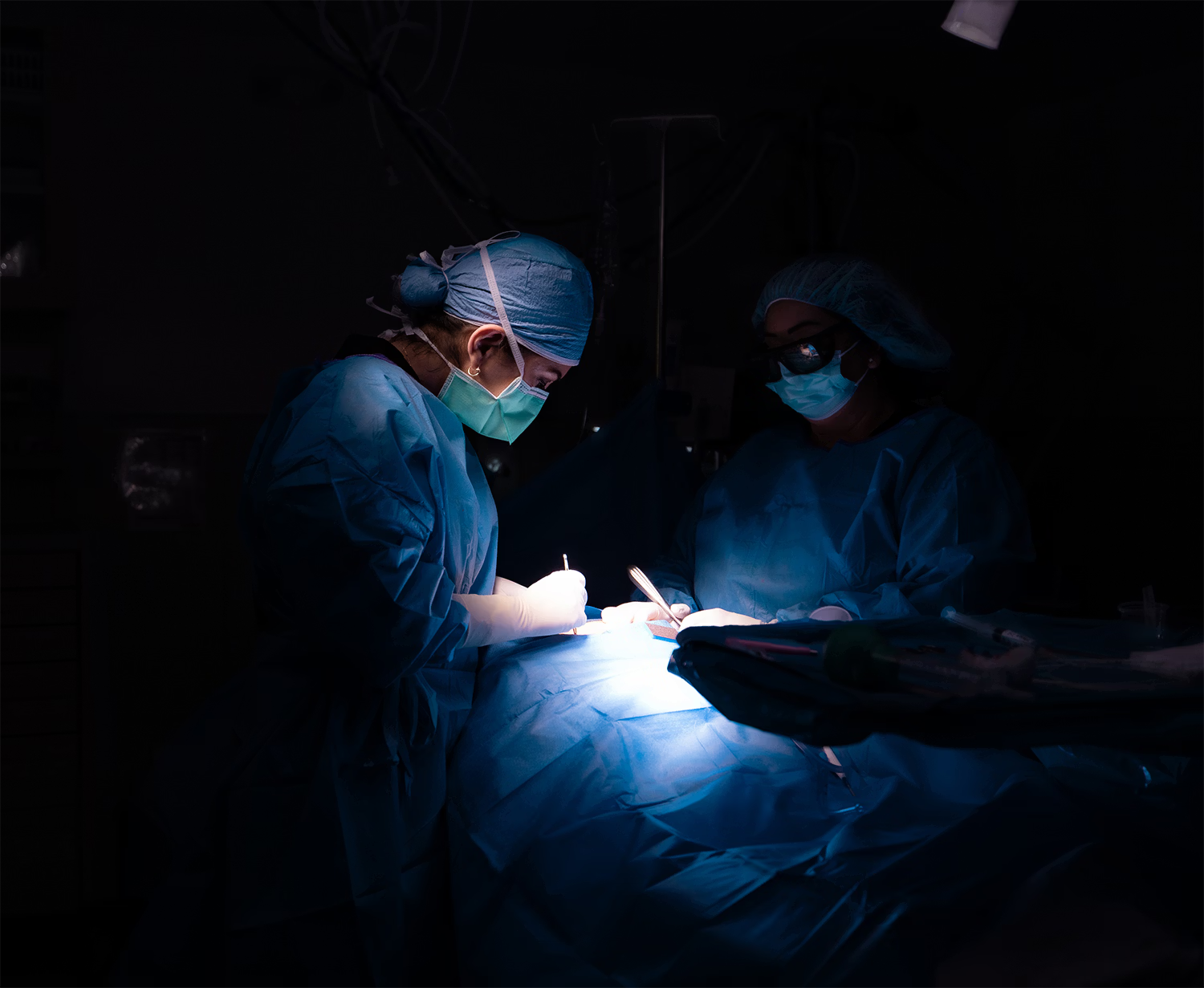
In the operating room, the surgeon sits at a console and guides tiny instruments with steady, controlled movements, while a high-definition view helps separate inflamed tissue from healthy tissue with care. Depending on what you need, that may include:
- Robotic colectomy to remove a diseased segment of the colon
- Robotic ileocolic resection for Crohn’s disease near the end of the small intestine
- Robotic rectopexy to lift and secure the rectum back into position
- Robotic J-pouch surgery to restore bowel continuity after some cases of colon and rectum removal
3. Both Non-Surgical and Advanced Treatment for Hemorrhoids
Many people want relief from hemorrhoids without surgery. Thankfully, there are in-office treatments that are quick and effective. Hemorrhoid sclerotherapy uses a small injection to help internal hemorrhoids shrink over time, while infrared coagulation (IRC) uses a brief burst of heat to seal the blood supply so the hemorrhoid can shrink.
4. Anal Fissure Care
Treatment for an anal fissure typically starts with conservative care to help the tear heal and prevent reopening. That often means:
- Eating more fiber
- Drinking more water
- Stool-softening strategies that help stools pass without scraping
- Warm sitz baths that relax the area and increase comfort
- Prescription ointments that can help relax the external sphincter muscles and improve blood flow.
Botox for anal fissures can help if a fissure keeps returning. This treatment temporarily relaxes the internal sphincter so the tissue can recover.
5. Sphincter-Preserving Techniques for Advanced Anal Fistulas
An anal fistula can cause a dull, throbbing ache that makes sitting uncomfortable. Most fistulas do not heal on their own, so treatment requires careful planning to clear infection while protecting the muscles that control bowel movements. Treatment options include:
- Laser anal fistula closure (FiLaC), which uses laser energy inside the tract to help seal it while aiming to spare muscle
- A LIFT procedure, which disconnects the fistula between muscle layers to reduce the risk of continence problems, before healthy tissue is used to cover the internal opening
6. Pelvic Floor and Functional Colorectal Care for Fecal Incontinence and Rectal Prolapse
Fecal incontinence and rectal prolapse are deeply personal, which is why the first step should be a careful, respectful evaluation that looks for the cause. Diagnostic tests are often used to find the root cause. These include:
- Anal manometry, which measures how well the muscles and nerves hold and sense stool
- Endoanal ultrasound, which can detect a tear or weakness in the anal sphincter, can help.
Once the source is clear, treatment can be tailored to your situation. Some patients benefit from Emsella pelvic floor therapy, which uses electromagnetic pulses during short, clothed sessions to strengthen pelvic muscles. Others do better with sacral neuromodulation, a minimally invasive option that helps calm urgency and improve bowel control by supporting nerve signaling.
If a prolapse or structural problem is the cause, robotic rectopexy and related pelvic floor repairs can lift and secure the rectum back into place.
Where to Find the Best Colorectal Surgeon in Los Angeles for Cutting-Edge Treatment and Patient-Focused Care
When you’re dealing with rectal bleeding, sharp pain, Crohn’s disease flare-ups, or the shock of a colorectal cancer diagnosis, finding the right specialist is essential for your peace of mind and your health.
Dr. Karen Zaghiyan is known for her patient-centered approach that prioritizes minimally invasive options and preserving function whenever it’s safe, whether that means office-based care for hemorrhoids, targeted treatment for fissures and fistulas, or advanced robotic and transanal techniques for cancer, IBD, and pelvic floor problems.
Ready to choose the best colorectal surgeon in Los Angeles for care rooted in minimally invasive plans and explaining treatments in plain language so you can make decisions without feeling rushed or left in the dark?
.svg)
.svg)
Request an appointment
For patients who need an urgent consultation, it is best to call us at (310) 289-9224. Otherwise, please complete and submit the form below and a member of our staff will contact you shortly.
.svg)

.svg)
.svg)